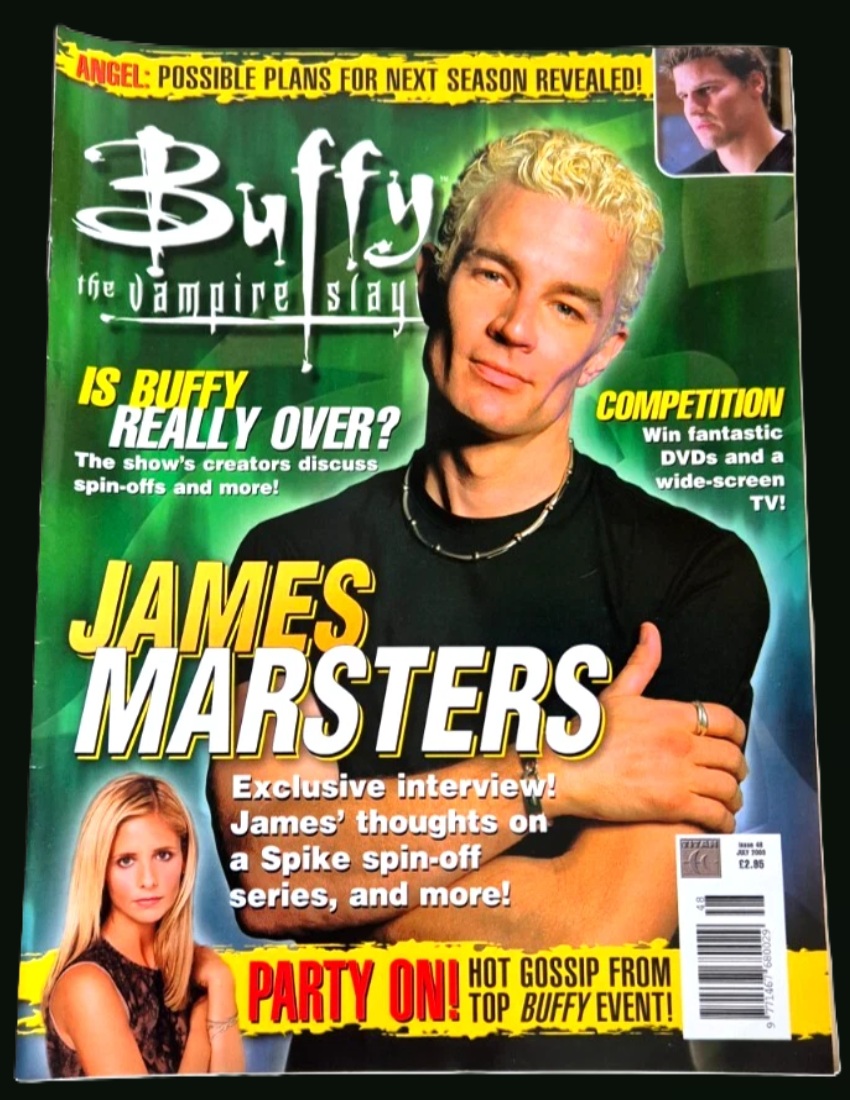
Date: July 2003
Price: £2.95
Page Count: 52
Editor: Martin Eden
Stake Out
It truly was the end of the line and the finish was in sight. ‘The Ultimate Showdown to Save the World Begins April 15’, the UPN announced, with a five part story pitting Buffy against her most insidious and evil opponent, Caleb, played with gusto by Firefly alum Nathan Fillion. But still, fans were asking about the possibility of a spin-off.
“I could create shows around different characters with different permutations and structures for the characters, but it would require coming up with a new show,” Joss Whedon told TV Guide. “It wouldn’t just be more of the same with some of the same people, It would have to be the way Angel is not Buffy – it would have to be neither of them, but something unique.”
Say, didn’t Hulu have something recently that could do just that? #BringBackBuffy (www.newsunnydale.com)
Over in LA, Angel still hadn’t been renewed for its fifth season despite enthusiasm from cast members and audiences. David Greenwalt felt more positive that an announcement would come imminently: “Joss, Jeffrey Bell and myself went to both FOX and The WB to explain the exciting new year for Angel. We’re going to revamp the whole show. The notion is of them going back to a place that is more like an advertising agency, lots of glass and light. It’s going to be great, with visitors from the BuffyVerse, including a possible regular from the BuffyVerse.”
The magazine points out that speculation at the time seemed to indicate either Anthony Stewart Head and James Marsters would make the move, one as a regular, the other as a guest. James seemed particularly sure, telling the mag “Yeah, I think I am going to Angel. It is being talked about.”
Blond Ambition by Abbie Bernstein
It’s been a busy year for Spike. He got his soul back and got rid of that pesky chip – but will he get back with Buffy? James Marsters speaks…
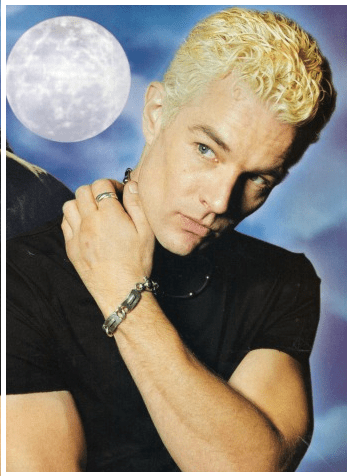
If you enjoy the character of Spike, the vampire anti-hero on Buffy, you’ve got company. James Marsters, who’s been playing Spike for six years now, is very fond of him, too. “He’s a Cadillac role,” James enthuses.
Portraying a vampire on a TV show didn’t sound promising at first to an actor with a substantial theatrical background, James admits. “I was a real snob. I always thought that if I did television, it would be more for the money than getting artistic rocks off. And that has been the pleasant surprise of my life, that the highest-paying, the highest profile job is also the most satisfying. I used to work at a place called A Contemporary Theatre in Seattle that did only new plays – some of them aren’t good, because they’re new. But on Buffy, I’m in a process where it’s always new work and the quality is always a modulation of ‘great’.”
There have been a lot of variations in Spike’s persona over six seasons, from villain, to comic relief when Spike’s bloodlust is curtailed by a government chip in his brain, to Buffy’s secret lover, to vampire with a soul – who’s required a lot of rescuing. “It’s been Olive Oyl recently,” James laughs. “I’m the damsel in distress!”
Which Spike does James like best? “There’s the immediate gratification of playing the bad boy killer. But there’s a deeper satisfaction of pursuing something that tries to reconcile that with redemption. Redemption is a theme that most writers shy away from, because it can seem sappy, but it’s also wonderful if you could say something about redemption that’s real, and it’s very gratifying to be in on trying to do that. So in a way, I’m the most excited now. Spike is passing through all the guilt of really facing what he did when he was a killer. And he did some heinous stuff. I envisioned him remembering how he killed each victim, how it felt, and having to really deal with that, trying to bring Spike into the moral universe that is Buffy without compromising the integrity of the show. I’ve never felt less secure artistically. This year is all about letting it all hang out and risking everything.”
When James came on board as Spike, he didn’t realise his character was going to spend so much time in emotional pain. “I have to say, Method acting for series television can eat you alive. I don’t think anybody who invented it was thinking in terms of submerging in a character’s emotions that long. I may have learned a bit of a lesson there – trust the writing more and not put myself through so much. I suspect I’m instinctually protecting myself a little more from the work than I did before. I used to lay myself open to it, but I think I’ve learned that it can take weird turns unexpectedly in TV, and go places you never imagined very quickly.”
James acknowledges that he never imagined when he signed on to play Spike that he’d wind up doing the attempted rape scene in “Seeing Red.” “It still haunts me. I am artistically proud to have done it, but it was the hardest day of my career.” Making it still more difficult, “Sarah Michelle Gellar is a friend of mine. I can’t watch movies about women or children getting hurt. If anyone hits a woman, I want to kill the guy who played the role, I want to kill the guy who wrote it, the guy who filmed it, and it doesn’t even matter if it’s in a good movie. It’s a completely irrational thing for me.”
On stage, James has twice played men who are violent with women. “In Voice in the Dark, I played a serial killer who has a 10-minute fight scene with a woman. I dragged her across the stage by the hair, she dropped me off a 10-foot drop into a spa. That scene is the end of the play, and you get an emotional release afterward. If you do movies or plays, you choose what kind of projects you would be willing to do.”
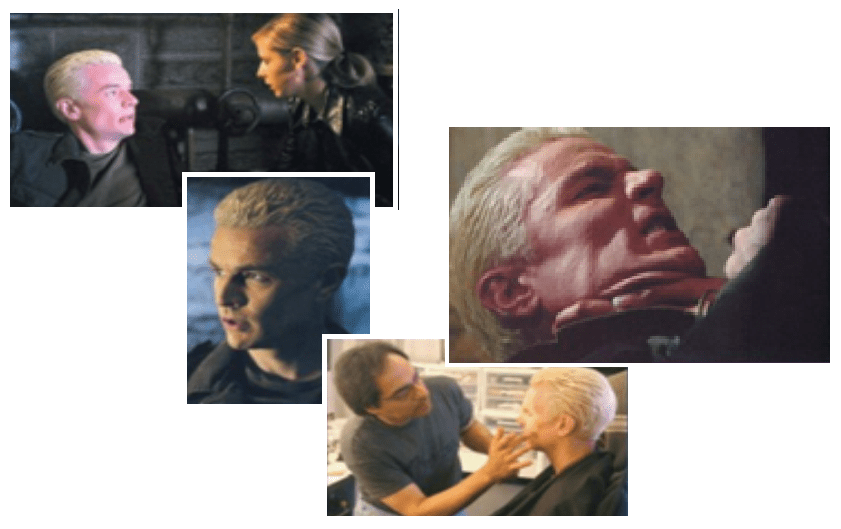
On a television series, however, actors are bound to perform the scripts as they come in. James now feels that it might have helped to discuss the scene further with Sarah prior to filming. “I think she probably tried to talk about it. It just terrified me. There was actually much less physical contact between Sarah and I than it looks like. We’re playing with depth of field illusions, where the two characters both move violently, and it looks like they’re touching, but they’re not. That scene, more than any other was very carefully choreographed.”
Unlike many screen sexual assaults, the scene was played not as though Spike’s actions were premeditated or deliberately hostile, but rather as though he was too lost in his emotions to fully comprehend what he was doing until Buffy kicked him across the room. “It was written very carefully. But I was more freaked out about the scene than I should have been, and I think that freaked Sarah out, and then I, as the character, reacted to her freaking out and that dynamic kind of fed on itself. I think that it ended up being a much more aggressive and violent scene than we intended. I think that it ended up being a much more aggressive and violent scene than we intended. I think there was an attempt to keep it from being that painful, but it played that way and so we have to deal with it. See, this is what happens when you are brave artistically. You set fires. And some of the fires burn hotter than you expected. Buffy is very brave about the risks we take, and that one burned us. At the same time, I’m kind of glad we did it. I was not glad I had to do it, but it puts us in an interesting place.”
The scene certainly put Spike in an interesting place, horrifying him so much that he takes the unheard-of step for a vampire of voluntarily getting a soul. “That’s why the rape scene was there,” James acknowledges. “Because how do you motivate him – how do you make him make a mistake that’s so heart-rending that he’d be willing to do that?”
Even when Spike was soulless, James tried to hint that the character might not be completely bad. “When Spike thought the chip was inactive in ‘Smashed’, he went straight for a victim. The writers wanted to make that very clear. They gave me two sets of ellipses in the speech to the intended victim, and I seized on that hesitancy. I’m always trying to play a little more soul than is written.”
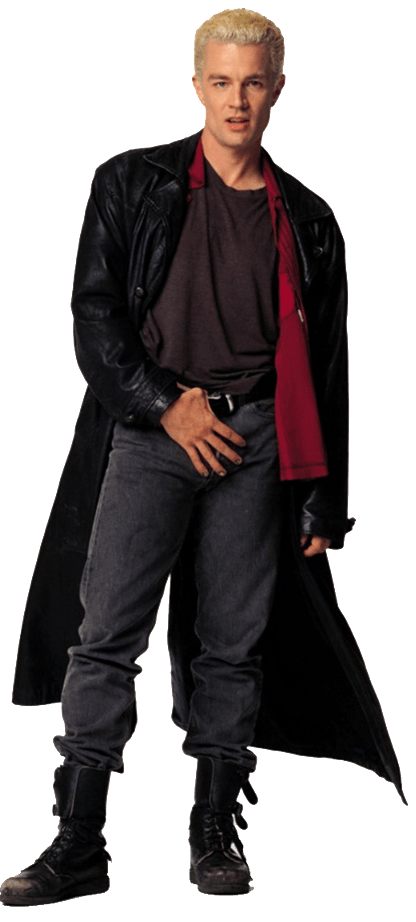
In Season Seven, Spike’s soul taxes his sanity, especially in the first few episodes, where he’s talking to himself in the school basement. “I kept saying, ‘No, he’s just really depressed,’ I kept trying to save my dignity,” James laughs. “And Joss would say, ‘No. He’s bonkers, his mind is absolutely shattered.’”
A prime example is the climax of “Beneath You”, with a distraught Spike revealing to Buffy why he got the soul. Doug Petrie scripted the episode, but Joss rewrote the final scene. “In the first version,” James explains, “it was a lot more of Spike talking about what his experience was, which works really well on stage. Both Doug and I come from the stage, and we were actually excited it was becoming theatrical. This is all hindsight, but I think a soliloquy is dramatic onstage because it’s amazing for a person to stand in front of a group of people and be honest and open. But there’s in implied privacy about film, and someone proclaiming themselves in a room with only two people in it is just not that dramatic. And so Joss employed the great cinematic device of potential danger in the shadows, and Buffy didn’t know where he was, and the tension held the scene while Spike talked about himself. Also, having me come in from the shadows allowed me to be more theatrical. Because you couldn’t see my face, I could put more in the voice. Stage is hanging word in the air. Joss gave me a situation where we could get away with doing that on film.”
Some of James’ favourite Buffy scenes are early ones: “I remember the first fight scene with Sarah. It was a fairly long fight with a lot of moves and Sarah was rocking. And in ‘A New Man’, driving around and hearing Tony Head’s voice, and looking over, and he’s a demon. I just almost blew so many takes [laughing], it was so delightful.”
James is also proud of a recent fight scene. For years, he’s said that if we see Spike’s feet leave he ground, it’s stunt double Steve Tartalia. However, that’s really James doing the Spike vs. Bringer stunt in “Showtime”. “I did a takedown that had everybody going crazy,” he reveals happily. “Usually, we’re fighting on cement, which is unforgiving for those kind of gags. But we were on a raised set that was really giving, so I did the foot sweep. I’m like, ‘Dude! It’s WWF!’ The reason I don’t usually do those gags – first of all, Steve is an artist doing that, but also on a cement floor, it’s just brutal.”
People often ask about a Spike spin-off. “I, in my arrogance, think that would be a great idea,” James says. “I think that you could hold the audience’s attention with the character. But what do you call a Spike spin-off? Not Angel? Angel‘s a great show. You don’t need two of them.”
At press time, no one knows whether there will be any Buffy spin-offs. James says he would have been happy if Buffy had kept going in its current form. “Anything that evolves this way, you only hope it can last this long. My character has better arcs than any other character, except for a lead, has in any other project, movies or theatre. And I’m not afraid of long-term projects. To tell you the truth, I’m not tired at all. We’ve got a lot of really great writers, great directors – I’m not afraid of going dry just yet. And I know that we could have continued to make good stories. Why would you want that to end?”
Although Buffy is drawing to a close, James says it doesn’t feel like the end just yet: “I think it will later,” he qualifies. “But right now, we’re at war. The enemy is time and we’re in the trenches, getting shot in the head by time. This is a long, sustained campaign, so you can’t think about the future when you’re in the middle of a season.”
What can he tell us about the finale? James laughs: “For the first time, I know one thing that’s going to happen and I don’t want to blow it. The end of the season will be very romantic. The Buffy/Spike thing is gonna end very dramatically. It’s both the coolest thing and the worst idea I’ve heard in my life. It is the last thing I ever would have thought about doing, but when it was described to me, it almost seems inevitable. We are going to piss off people – oh, my God! But we’re going to make them love more. It’s amazing. I’m trying to think of another creator that’s like Joss, that takes you on really dark paths, but because you trust their heart, you know that they’re talking about love, probably, in the end of it, and that it’s okay for them to take you through that dark journey and agitate you and make you afraid and angry and all of those things. I trust Joss, I trust Marti Noxon and I think our audience does, too. It’s gonna end beautifully.”
What does James see himself doing after Buffy? Besides continuing to perform with the band Ghost of the Robot, “I keep thinking of stage. I could get hired in New York, and I could get hired in London. I always thought, ‘I’d love to break the West End, but I’m an American.’ And now I’m one of those actors I used to detest who could go get a stage job because I’m on some damn TV show. I’ve always felt good enough to do it, as every actor does, so hell, I’ll use it!”
Plays James would like to do include Steven Berkoff’s Kvetch and George Bernard Shaw’s anti-war comedy Arms and the Man. However, there’s no master plan. “I’ve never been one to set up a bunch of projects. I’ve always focused right on what I’m doing. I don’t want to sound cocky, but I also feel very confident, because I had a career before Buffy in stage, that I can go back and have a career in stage again. A stage actor has audience feedback right when he does something, so he knows when he’s boring and when he’s not boring. I know that I can be boring, but I also know that if I do my job correctly, I’m fairly successful in holding the audience’s attention. I have confidence that I do one thing well. I’m not a good carpenter. I don’t know what’s ahead, but I do know that I’m pretty well set to making my living acting for the foreseeable future.”
Does James see acting any differently than he did when he started out? “I’ve become more ambitious, and I’ve become more specific about what I want out of storytelling. I have my own agenda now. In maybe my third play, The Me That Nobody Knows, I had a song and I was belting it out to this little audience in junior college in Modesto, and got the feeling of finding a way to let my light shine, and feeling like I found a home that night. I found a way that I could start to try to get at my best self. That’s just a process of being very public about the things that we’re normally very private about. Putting it on stage makes you consider it more and it makes you deal with your own issues. And that hasn’t changed. I’ve moved on to having a list of plays that I want to produce, having ideas that I want to write about, knowing the kind of theatre and television that I find valuable. But really, underneath it all, is just the joy of being able to express myself and learn that I’m not alone. Because that’s what all artists are doing, is trying to get at something that is universal, because what happens when that’s expressed is, whatever we’re talking about, we all remember that we’re really not alone.”
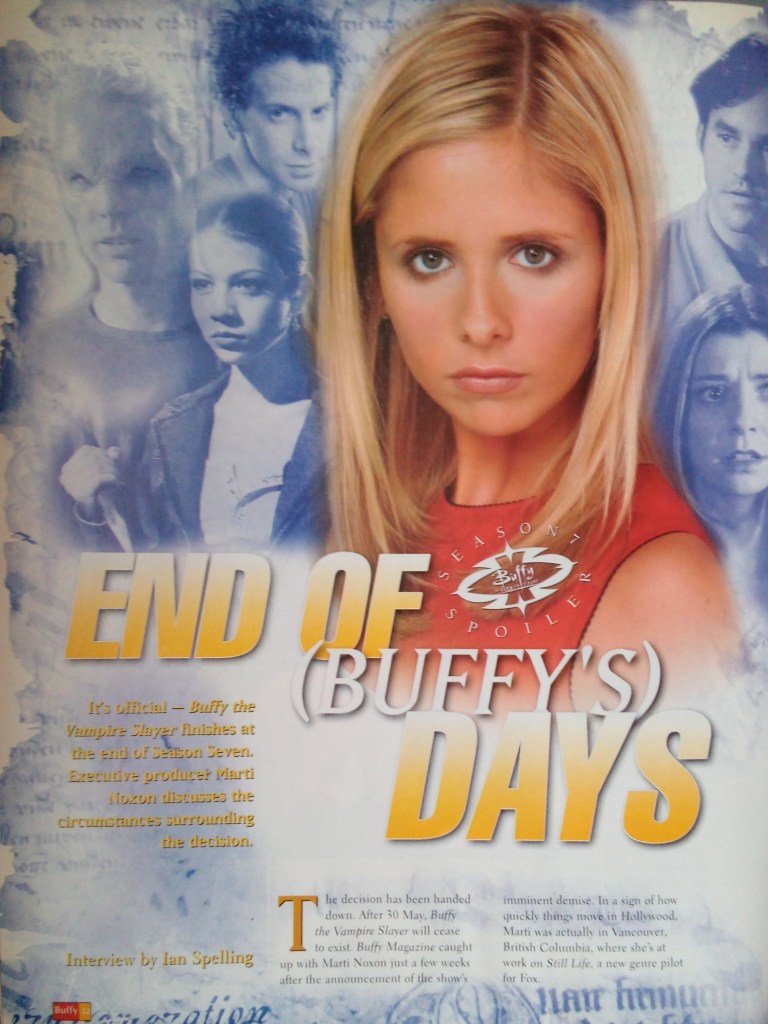
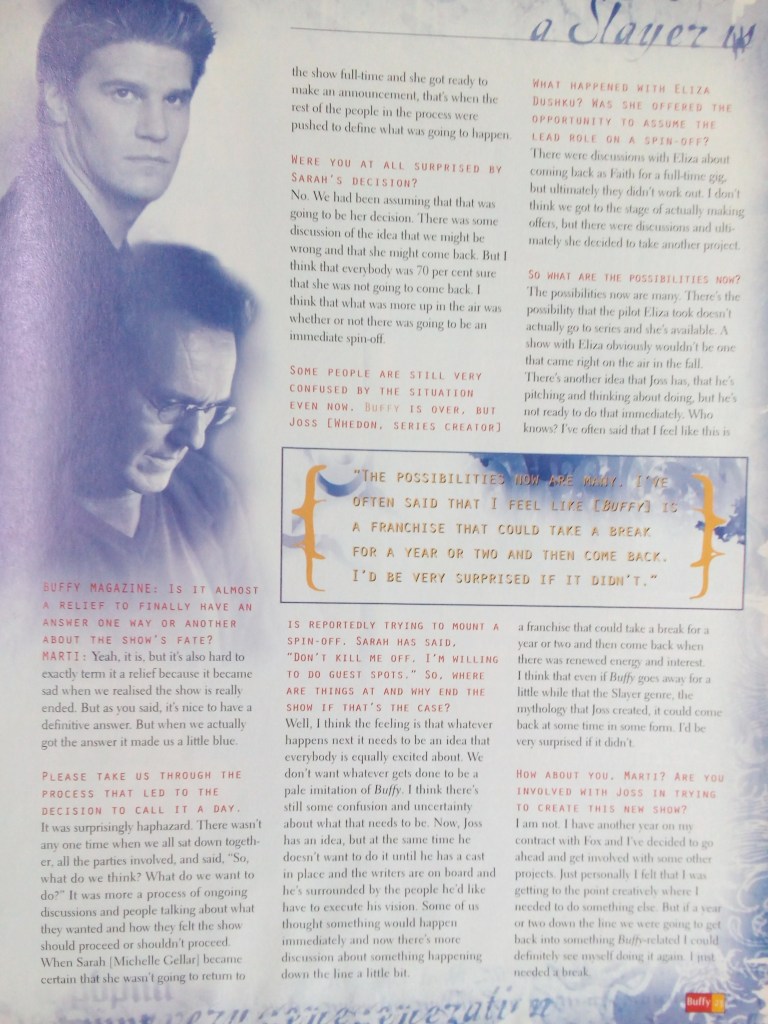
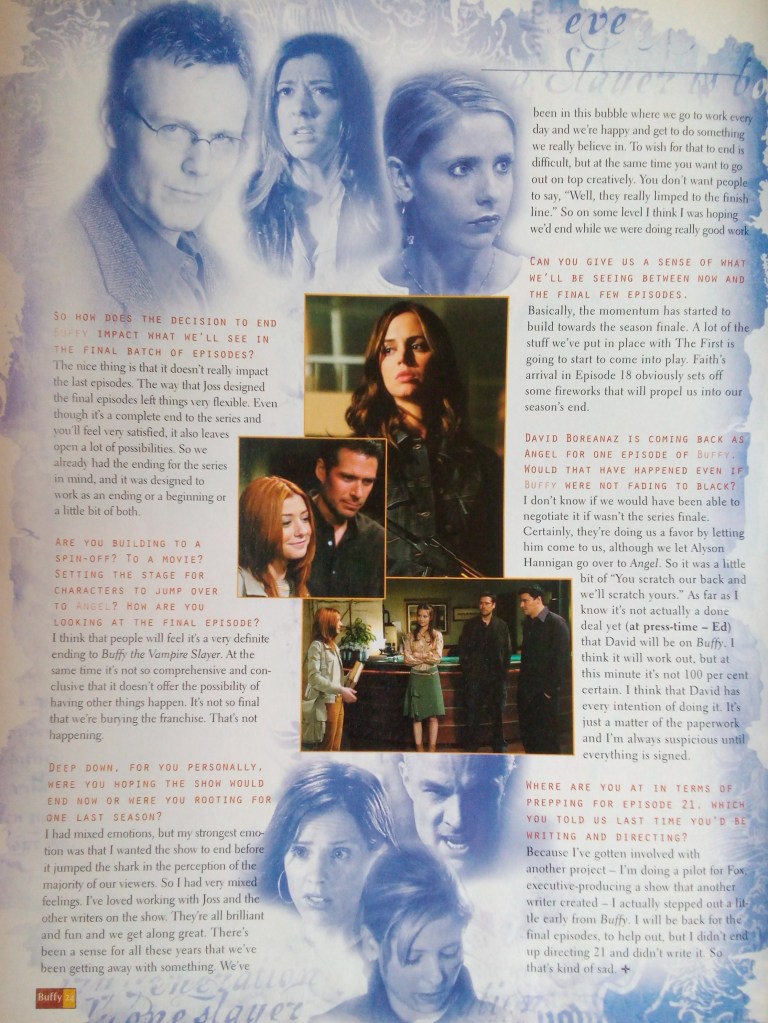
End of (Buffy‘s) Days by Ian Spelling
It’s official – Buffy the Vampire Slayer finishes at the end of Season Seven. Executive Producer Marti Noxon discusses the circumstances surrounding the decision…
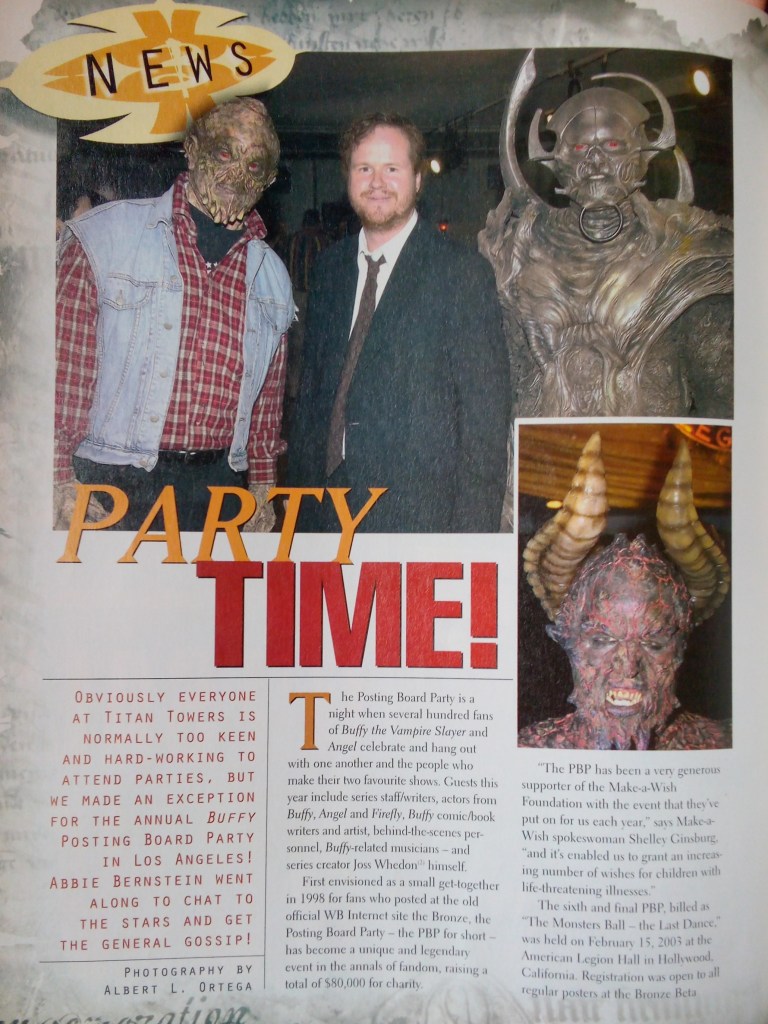
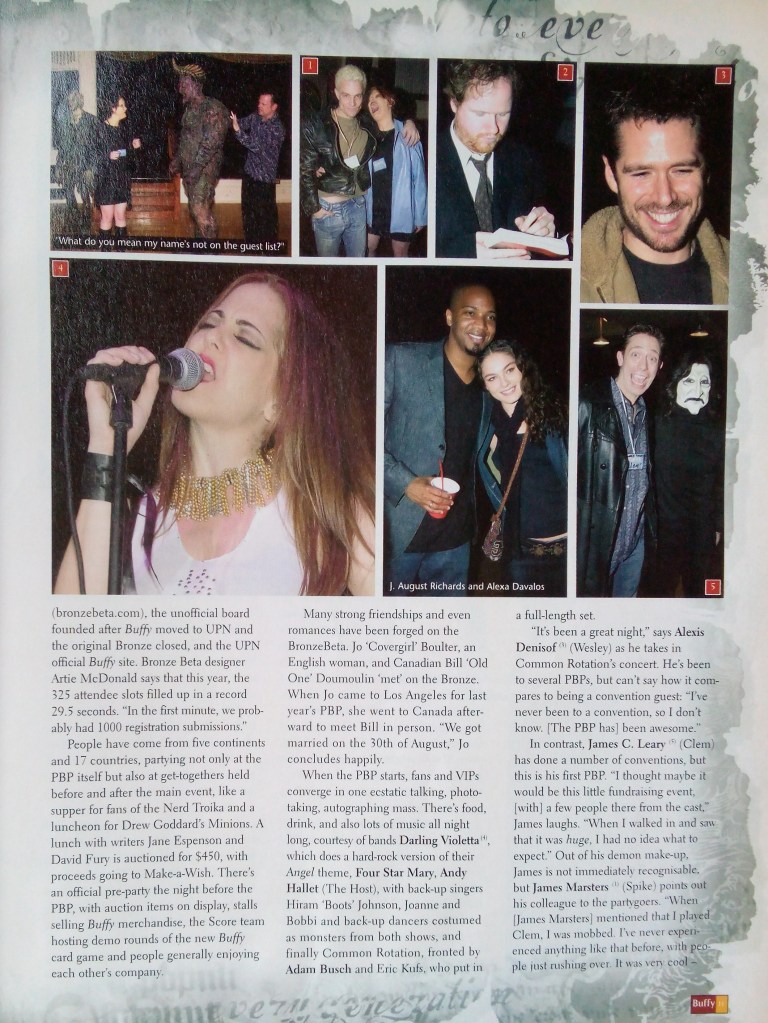
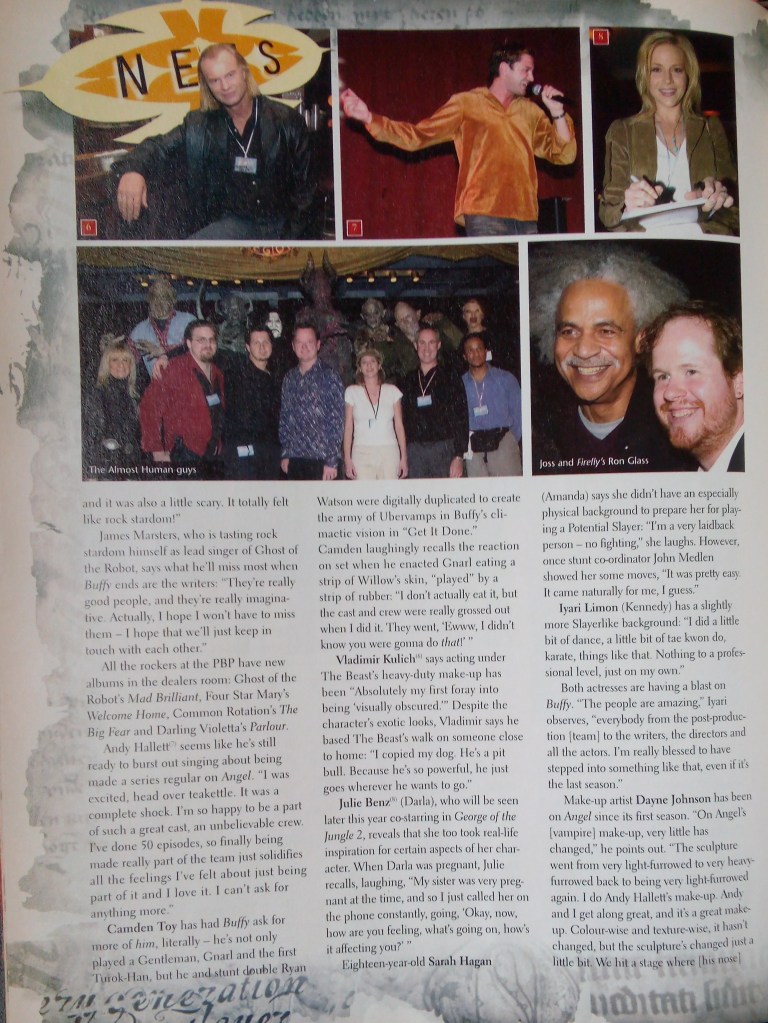
Party Time! by Abbie Bernstein, with photography by Albert L. Ortega
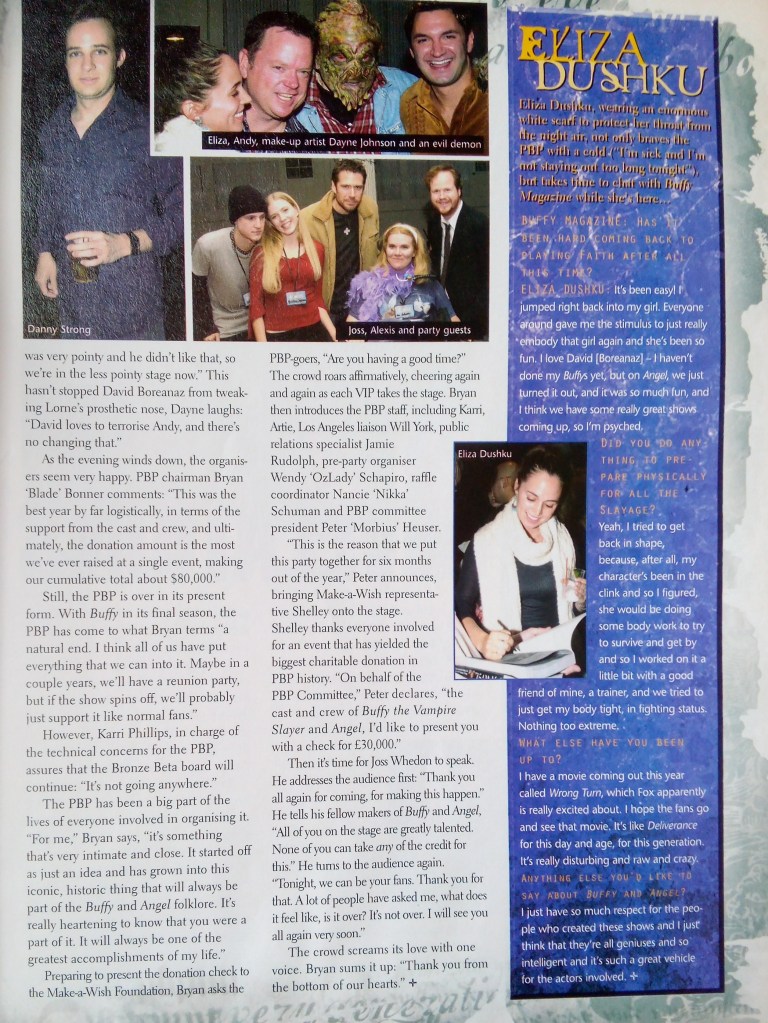
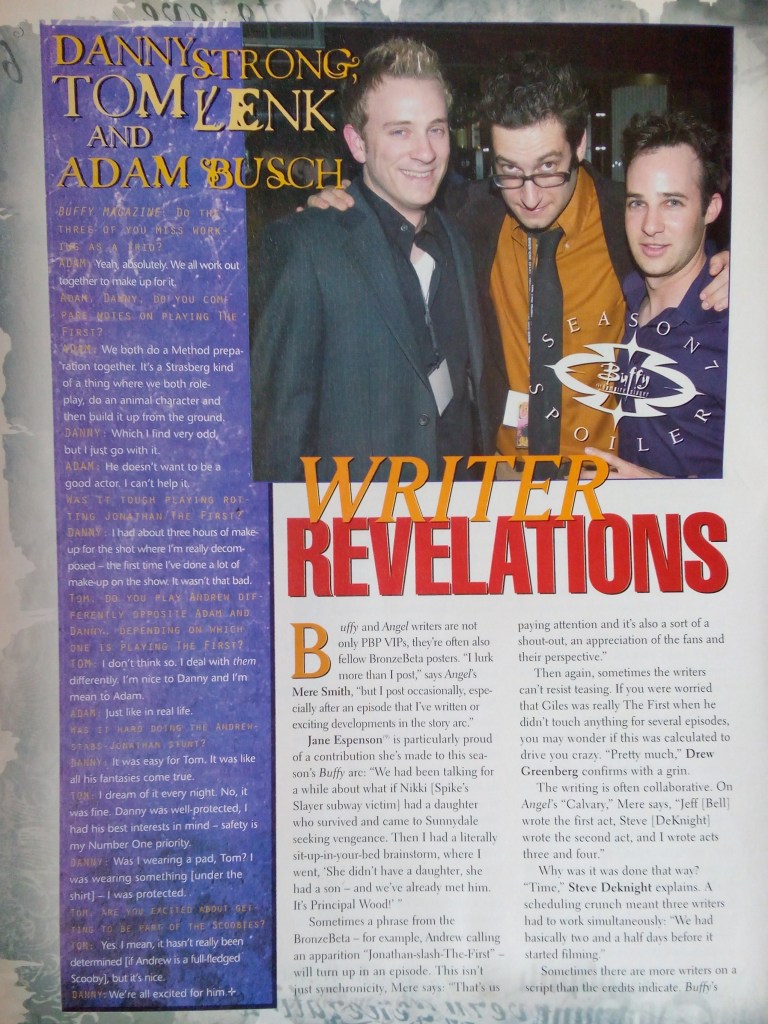
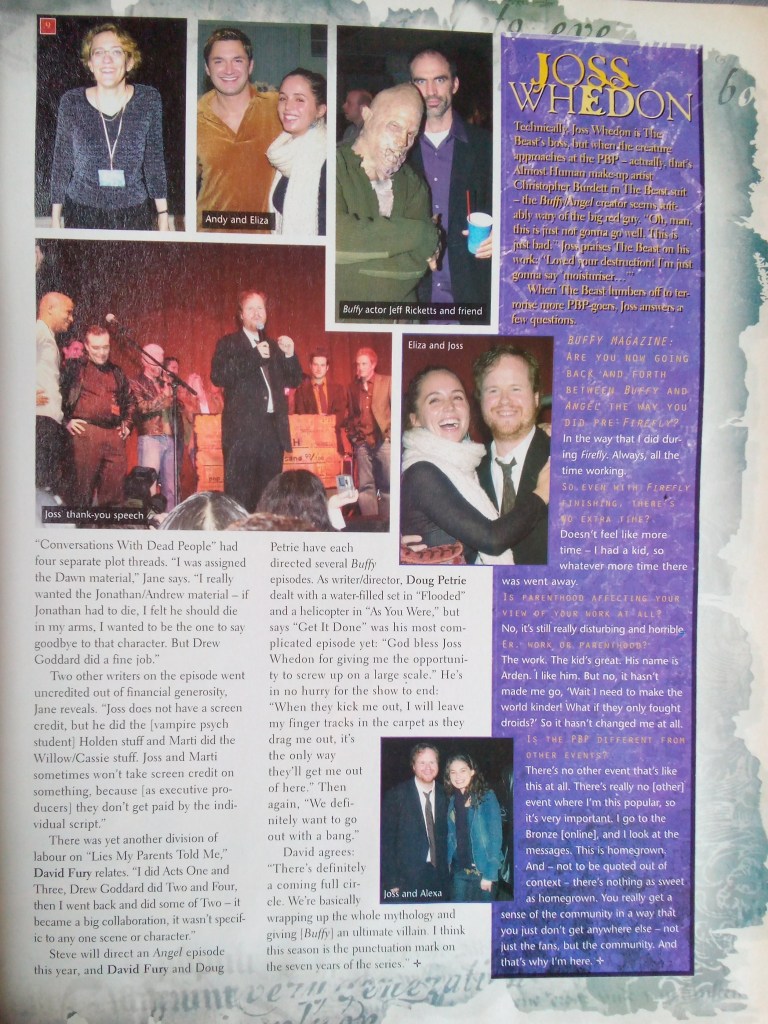
Obviously, everyone at Titan Towers is normally too keen and hard-working to attend parties, but we made an exception for the annual Buffy Posting Board Party in Los Angeles! Abbie Bernstein went along to chat to the stars and get all the general gossip.
Comic
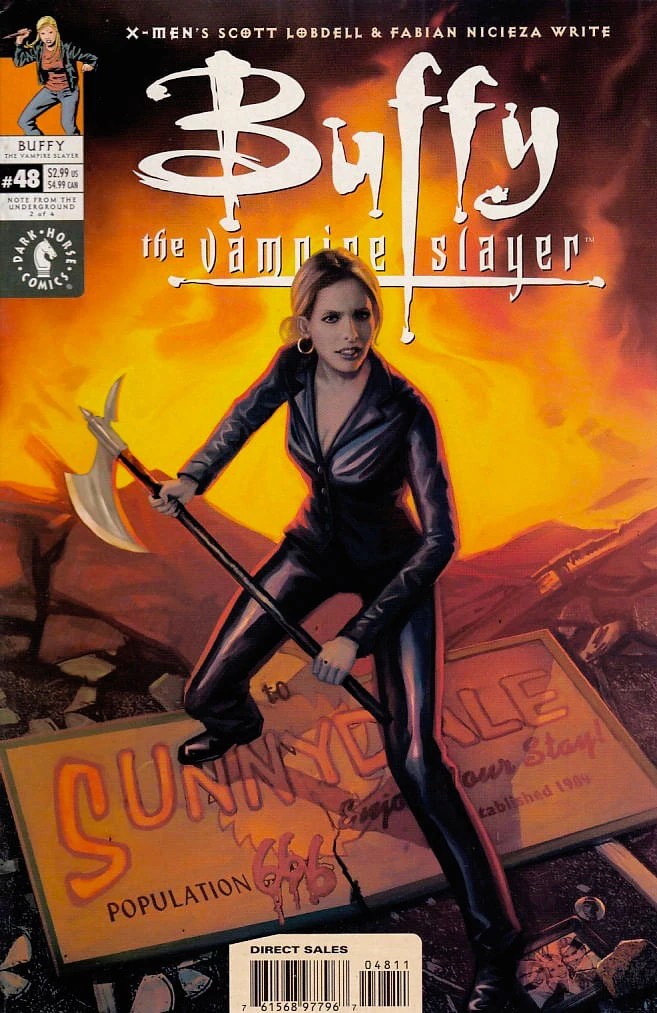
Titled Notes of the Underground (Part 3), with material from Buffy the Vampire Slayer #48.
Poster
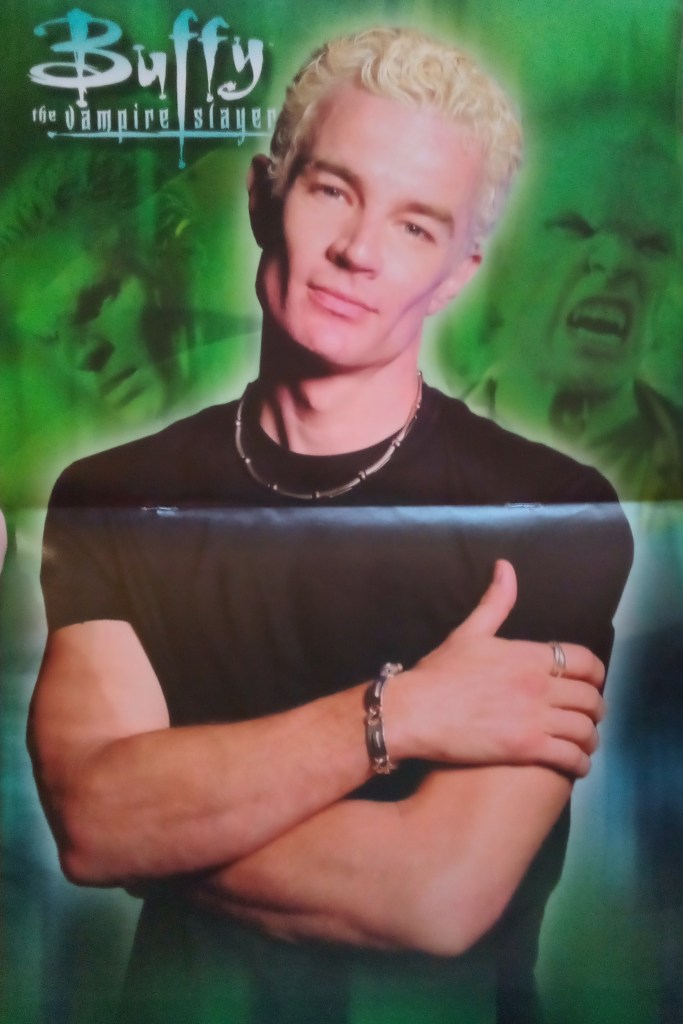
A poster of James Marsters as Spike.