


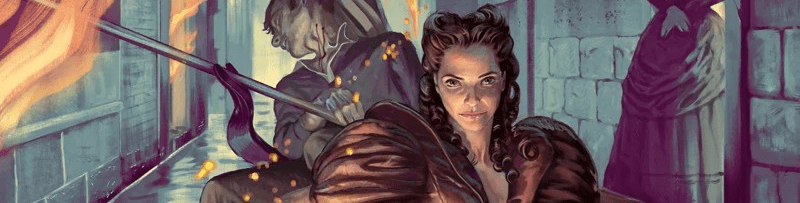

Written by The Curator
Based on an idea by Juliet Landau & Christos Gage
Artwork and Covers by Steve Morris
“Your eyes are crayons. They keep drawing me.”
Drusilla
If you’re reading this, then someone found the tapes.
Maybe the static drew you in. Maybe you heard the name. Maybe she called you like she called me.
I’m Felix Morrow. Thirty-two years old, chronically under-employed, and profoundly uncertain whether I’m losing my mind or just documenting someone else’s.
I used to be a photojournalist. My pieces ran in Sunday columns about faraway wars and local tragedies. Nothing glamorous. But they were real – grainy faces, real hunger, the kind of grief that stained paper when the ink dried.
And then came the shift. Editors stopped printing dispatches. Said the world wanted speed, bite-sized truth, clickable headlines. The internet was boiling over and nobody had time for nuance anymore.
My camera’s old. She’s analogue. Heavy. She growls when I rewind her and purrs in Prague’s cold like she’s got breath left. I don’t trust digital – it feels dishonest. Like it edits the soul.
It’s 1997, and I drink more than I should. Red-label vodka, mostly. Cheap and quick. At night, I dream in static. Sometimes it’s war zones. Sometimes it’s color. Lately, it’s her.
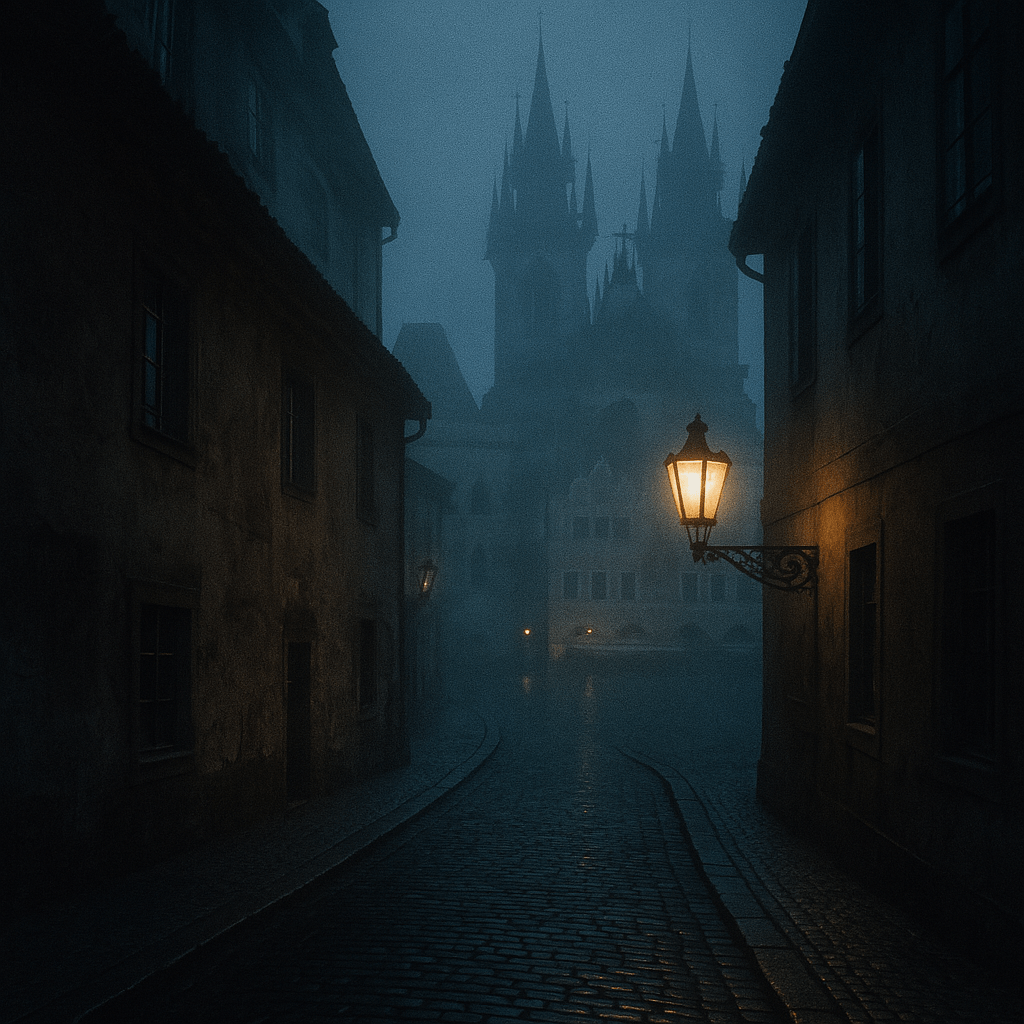
The job was supposed to be simple: film historic chapels for a Prague travel pamphlet. Gothic structures, stone angels, quiet cloisters. No drama. No story. Just footage they could loop under piano music for American tourists who like dust with their spirituality.
I filmed everything slowly – doorways, rooftops, candle holders, saints with scratched eyes.
The Convent of Saint Agnes came last.
It’s barely listed in the guidebooks. Buried north of the river, behind bookshops and graffitied alleyways. The structure’s half-restored – ivy curling through the cracks like regret. Nobody there when I arrived. Just silence and dust.
She entered frame by accident.
I was angling the lens toward a fractured mosaic – a sort of lost Madonna – with red glass bleeding into gold.
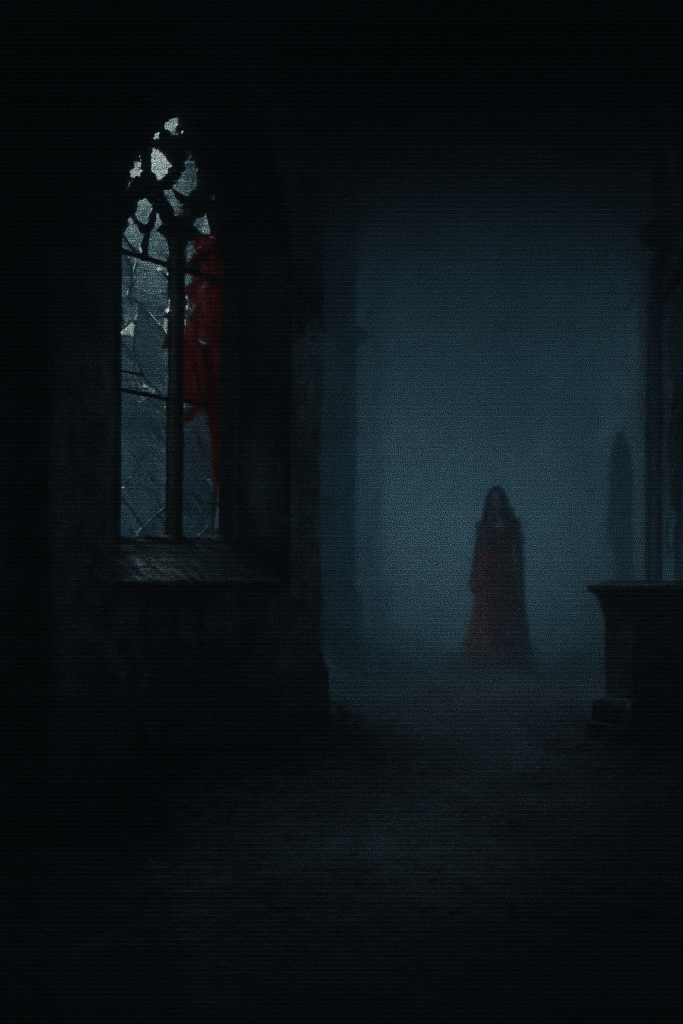
And then she walked across the shot.
Barefoot.
Dress dragging like velvet spilled in ink. Hair dark and wet, straggled like something just wrung from river water. A shape in crimson and bone.
She held something to her chest. I thought it was a dove.
It wasn’t.
She stood beneath a cracked archway and spun once. Hummed to herself. Not music, exactly. More like broken lullabies spoken through a child’s throat.
And then she spoke.
“You’ve got jelly thoughts,” she said. “They wriggle when you blink. So messy.”
I didn’t respond.
I couldn’t.
Her voice was syrup poured over gravel – sweet and jarring, broken in places, like memory suffering a fever.
She giggled. “Your eyes are crayons. They keep drawing me. Naughty, naughty.”
She stepped closer. Her fingers brushed my cheek. Cold. Not death – but something… after.
“You taste like stories,” she whispered. “Old ones. Written in your liver.”
I remember every word. Every gesture.
She wasn’t a woman.
She was theatre.
Tragedy distilled into velvet and teeth.
And then…
Spike.
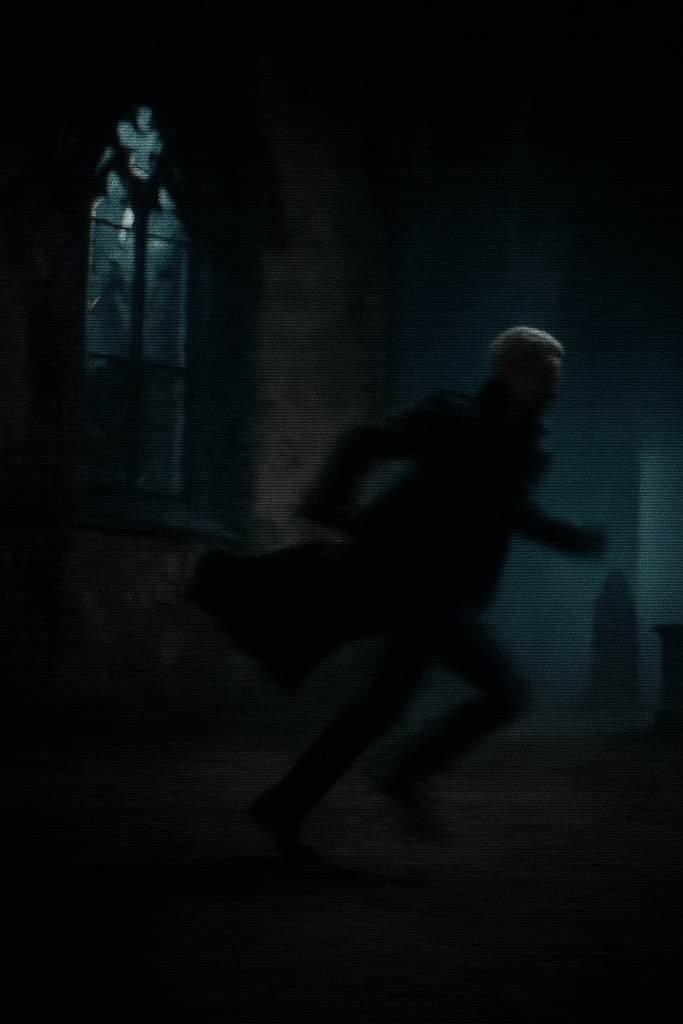
He tore through the chapel wall like fury. Coat whipped out behind him, boots slick with blood. There was shouting beyond him. Metal. A mob.
“Dru!” he shouted. “They’re coming!”
Drusilla twirled again, laughing. “Oh, the audience has arrived!”
Then she fell.
Like a puppet cut mid-spin.
Spike caught her. Cradled her gently. Kissed her hair. Glanced at me.
Saw the camera.
“If you’re filming this,” he growled, “I’ll teach your ribs how to scream.”
I didn’t move.
He lifted her into his arms, vanished down a stairwell.
I stayed.
Long after the echoes faded.
Long after the moon had risen and the chapel forgot them.
In the weeks that followed, I became her shadow.
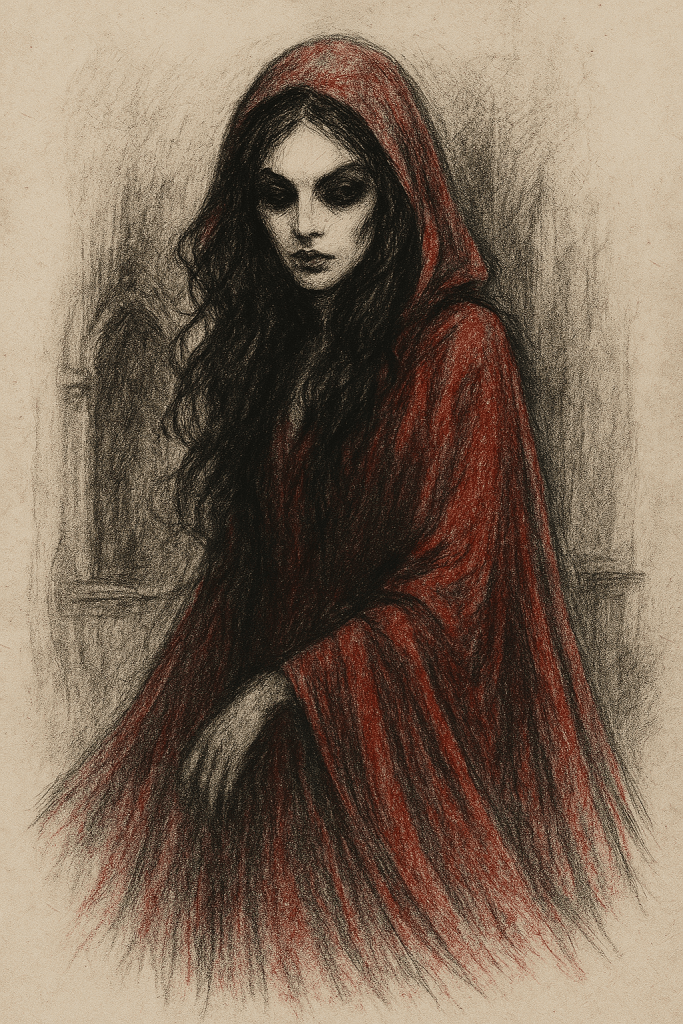
I saw her again near the puppet theatre – dancing alone, her hands held out to invisible strings.
Once by a graveyard fountain – she dipped her fingers in and sighed like she’d remembered someone else’s funeral.
And once more – feeding.
It was tender. Beautiful, in the way death sometimes is when it doesn’t care you’re watching.
I didn’t film that one.
Couldn’t.
Not because I was afraid, but because it felt… sacred.
I started calling her The Crimson Ghost. Not to anyone else. Just in my notes. My tapes. My dreams.
Local archivists told me nothing.
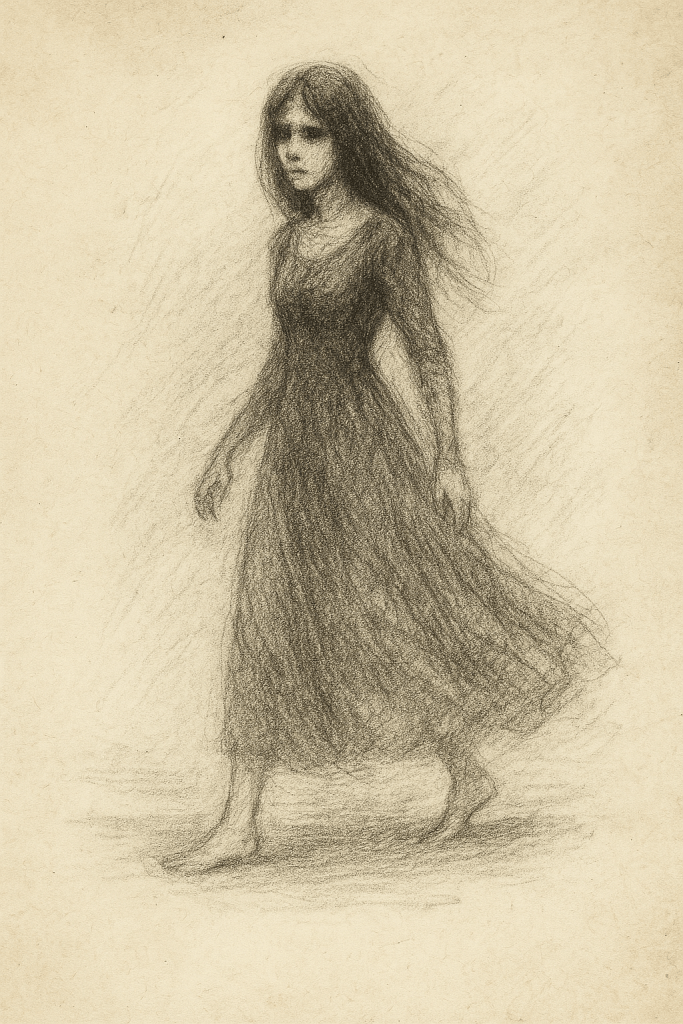
One man said she was part of a curse. Another swore she’d been seen during the Nazi retreat, dripping blood over altars and humming Ave Maria. None of it lined up. All of it felt true.
I stopped submitting footage. The pamphlet went out without my work. I didn’t care.
I only wanted her.
Not romantically. Not like that.
I wanted to understand.
She became my axis.
My reason.
My ruin.
She was wounded when they fled. Her laughter turned to wheezing. She clung to Spike like a dying ballerina.
He protected her like she was church.
And I watched them leave. Europe forgotten behind them.
I remember thinking – if death looked like her, maybe it wasn’t the end.
Maybe it was art.
Maybe it was home.
I stayed in Prague two weeks longer than I’d booked. I drank. I scribbled maps. I traced her steps like holy scripture.
I saw her once more – very briefly, from a bridge. She looked directly at me.
Smiled.
Then turned.
Gone.
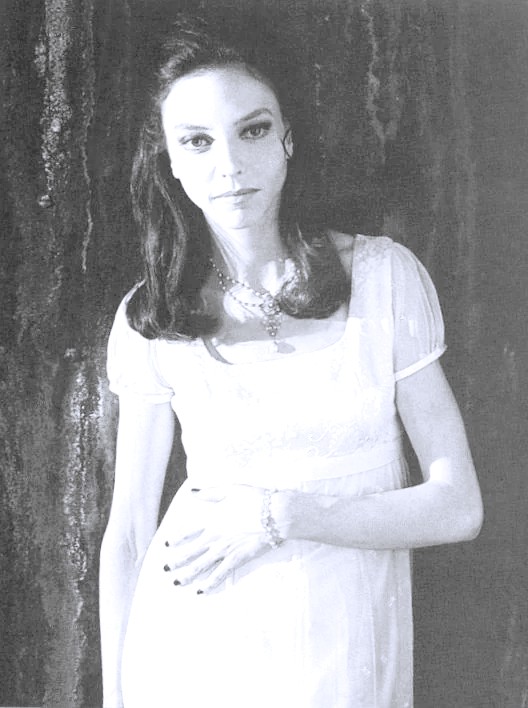
This is where it started.
This is where I fell.
Not into love. Not into madness.
Into obsession.
You don’t follow beauty like hers without consequence.
You run.
And you catch.
And it breaks you.


 The Watcher's Guide